Learn Cebu’s Bamboo Species: Use it to Cook or in your Favorite Foods
Bamboo grows so naturally in Cebu that it can fade into the background. It lines rural roads, holds soil along slopes, shades streams, frames old houses, and appears in markets as baskets, skewers, trays, and fresh shoots. Yet bamboo is not just one plant. Cebu and nearby Visayas areas have several useful kinds, each with its own form, strength, flavour potential, and best household use.
In kitchens, bamboo has two lives. The young shoot becomes labong, a familiar vegetable in coconut milk, soups, stir-fries, and vegetable stews. The hardened culm, or pole, becomes a tool: a skewer, ladle, tube, steamer, chopping surface, basket, or food container.

Bamboo is a group of useful plants, not a single species
People often say “kawayan” as if all bamboo is the same. In everyday speech, that makes sense. In farming, craft, and cooking, the differences matter.
Some bamboos grow thick, thorny, and strong. These suit house frames, fences, and heavier utensils. Some grow straighter and thinner, which makes them easier to split for weaving. Others are valued for young shoots that can be cooked as food.
Here are bamboo types commonly known in the Philippines and often found, planted, traded, or used in Cebu and the Visayas. Local naming can vary by town, so one name may refer to slightly different bamboo in different places.
Common local name | Scientific name often linked to it | Main traits | Common kitchen or food use |
Kawayan tinik | Bambusa blumeana | Thorny clumps, strong culms, common in rural areas | Poles, skewers, split strips, baskets, sometimes shoots |
Kawayan kiling | Bambusa vulgaris | Green or yellow culms, widely planted, easy to recognise | Light utensils, containers, general household use |
Bolo | Gigantochloa levis | Large culms, thick walls, good construction bamboo | Strong tubes, food containers, larger craft pieces |
Bayog | Often linked with Dendrocalamus species | Large bamboo, valued for strong poles | Cooking tubes, sturdy utensils, shoots when properly prepared |
Buho | Schizostachyum lumampao | Smaller, thin-walled culms, easier to split | Woven baskets, fish traps, light food containers |
Anos | Schizostachyum lima | Slender bamboo, useful for weaving | Trays, baskets, wrappers, light kitchen items |
Giant bamboo | Dendrocalamus asper | Very large culms, widely planted in the Philippines | Edible shoots, containers, heavier craft work |
These names show why bamboo has stayed useful for generations. A cook, farmer, or craftsperson does not simply ask, “Is this bamboo?” The better question is, “What kind of bamboo, and what is it good for?”
Labors is the most direct way bamboo enters food
The best-known edible part of bamboo is the young shoot. In Cebu and across the Philippines, it is usually called labong. It is harvested while still tender, before the shoot hardens into a woody pole.
Fresh labong has a mild, earthy taste. It can hold coconut milk, dried fish, shrimp, mung beans, pork, sardines, or leafy greens. It also adds bulk and texture to dishes without overpowering them.
Common Cebuano and Filipino ways to cook labong include:
Ginataang labong
Bamboo shoots simmered in coconut milk, often with shrimp, dried fish, or small pieces of pork.
Utan bisaya with labong
A light vegetable soup where labong joins malunggay, squash, okra, eggplant, or other local vegetables.
Adobong labong
Sliced bamboo shoots cooked with vinegar, garlic, soy sauce, and pepper.
Labong with sardines
A practical home dish where canned sardines add flavour to boiled and sautéed bamboo shoots.
Stir-fried labong
Thin strips cooked with garlic, onion, and a small amount of meat, seafood, or bagoong.
Before cooking, fresh shoots need proper preparation. They are usually peeled, sliced, rinsed, and boiled. Many cooks discard the first boiling water to remove bitterness. This step also helps make the shoots safer and better tasting.
Fresh bamboo shoots should not be treated like ready-to-eat vegetables. Peel them well, boil them properly, and cook them until tender.
Not every bamboo shoot is equally pleasant to eat. Some are more bitter or fibrous than others. Giant bamboo and some large Dendrocalamus types are widely valued for edible shoots. In practice, households rely on what grows nearby and what older family members know to be good.

Bamboo shoots suit the Cebuano way of building
Cebuano cooking often makes good use of simple ingredients. A dish might start with garlic, onion, tomato, ginger, or coconut milk, then build flavour with dried fish, shrimp paste, fish sauce, or grilled fish on the side. Labong fits this style well.
Its texture matters as much as its taste. When sliced thin, it becomes soft but still slightly crisp. When cut thicker, it gives a stew more body. In coconut milk, labong absorbs richness. In vinegar-based cooking, it keeps a clean bite.
A good labong dish often depends on three details.
Choose young shoots with tight layers
Tender shoots are easier to slice and cook. Older shoots turn fibrous. The outer sheaths should be removed until the pale inner core appears.
Boil before the final cooking
Boiling reduces bitterness and improves texture. Some cooks boil once, rinse, then cook again in the actual dish. The exact method changes by household, but skipping the boiling step is not wise.
Pair labong with a strong flavour
On its own, bamboo shoot is quiet. It works best with ingredients that bring salt, fat, smoke, or umami. Coconut milk, dried fish, shrimp, sardines, pork, and bagoong all work well.
This is why labong remains practical. It stretches a dish, rests well with local flavours, and turns a wild or backyard plant into food.
Bamboo also shapes how food is cooked
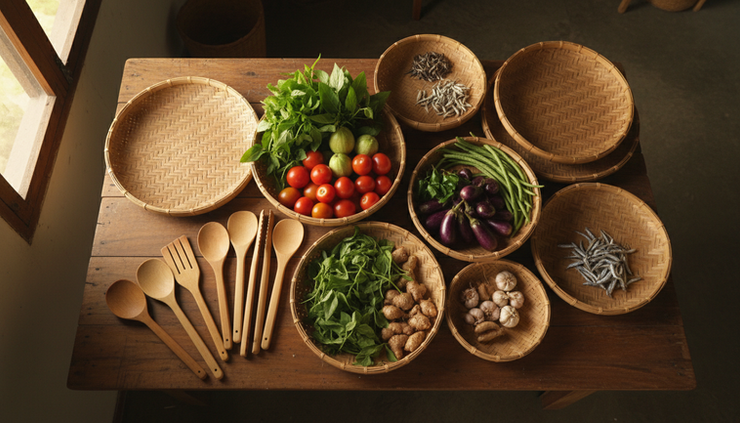
Beyond shoots, bamboo is valuable because the mature culm is light, strong, hollow, and easy to split. A single pole can become many cooking tools.
In Cebu, bamboo appears in food preparation more often than people realise. It may not always sit inside the pot, but it supports the work around it.
Common uses include:
Barbecue sticks
Thin bamboo skewers hold pork, chicken, hotdog, fish balls, and banana cue over charcoal.
Food picks and small skewers
Short pieces serve street food, fruit, kakanin, or grilled items.
Cooking tubes
Larger bamboo sections can hold rice, fish, chicken, or vegetables for steaming or roasting near a fire.
Spatulas and stirrers
Split and shaped bamboo makes light tools that do not easily scratch clay pots or metal pans.
Ladles and scoops
Sections near the node can be carved into simple scoops for dry goods or cooked food.
Strainers and trays
Split bamboo becomes woven tools for draining, cooling, and serving.
Baskets for carrying food
Bamboo baskets help transport vegetables, fish, root crops, and market goods.
Some of these tools are everyday items. Others appear more in rural cooking, backyard food preparation, or traditional craft. Together, they show that bamboo is not only an ingredient. It is part of the cooking system.

Why bamboo works well as a cooking material
Bamboo became common in kitchens for practical reasons. It grows quickly compared with many hardwoods, and it can be harvested without complex tools. When dried and handled well, it is light, firm, and easy to carve.
For cooking utensils, bamboo has several strengths.
It is light in the hand. A bamboo spatula or tong is easy to use for long cooking tasks.
It is gentle on cookware. Smooth bamboo is less likely to scratch pots and pans than metal.
It handles dry heat well when used properly. This makes it useful for skewers and some fire-side cooking.
It splits cleanly. Thin strips can be made into baskets, trays, and steamers.
It is widely available. In many Cebu towns, bamboo can be grown, bought, or sourced locally.
Still, bamboo needs care. Fresh bamboo contains moisture. If stored badly, it can crack, mould, or attract insects. Utensils should be dried well after washing. Food-contact items should be smooth, clean, and free from chemical treatment.
For skewers, soaking them in water before grilling can reduce scorching. For carved utensils, regular washing and full drying help them last longer. For bamboo tubes used in cooking, the inside should be fresh, clean, and suitable for food use.
Weave bamboo into kitchen storage and serving tools
Thin-walled bamboos such as buho and anos are valuable because they split into narrow strips. These strips can be woven into objects used around food.
In many Philippine homes and markets, bamboo weaving appears as:
Bukag
A carrying basket for produce, root crops, and market items.
Kaing
A larger basket often used for fruits and vegetables.
Bilao or nigo-style trays
Flat woven trays for drying, sorting, serving, or cooling food.
Small containers
Useful for kakanin, dried fish, vegetables, and household goods.
These items are not just decorative. They breathe. Air can pass through the weave, which helps when carrying fresh produce or cooling cooked food. They are also repairable and biodegradable, two reasons many people still prefer them over plastic for certain tasks.
Bamboo weaving also keeps skill alive. The quality of a basket depends on how the bamboo was selected, split, shaved, and woven. A good strip must be even. A good weave must be tight without becoming brittle. That knowledge often comes from years of practice.
Cebu’s bamboo culture connects farms, food, and craft
Bamboo links the land to the kitchen. A clump planted near a boundary can slow erosion, mark property lines, and provide future poles. A harvested shoot can feed a family. A mature culm can become skewers, baskets, a tray, or a cooking tube. Leftover strips can support small repairs around the house.
This cycle makes bamboo especially useful in island provinces. Materials that can be grown locally help reduce dependence on imported or synthetic goods. Bamboo is not perfect for every job, but it carries a rare mix of strengths: edible when young, workable when mature, and familiar across generations.
Cebu’s bamboo is more than a roadside plant. It is a quiet kitchen partner, one that feeds, holds, stirs, grills, carries, and connects everyday cooking to the land where it grows.


Comments